“This is Jean’s story. But it’s also my story, because Jean was my mum”, says Jean’s daughter.

It’s the story of how her experience of shared ownership started well, but went downhill. And it’s the story of how mum’s shared ownership flat continues to cause emotional and financial difficulties for her family, years after she passed in March 2023.
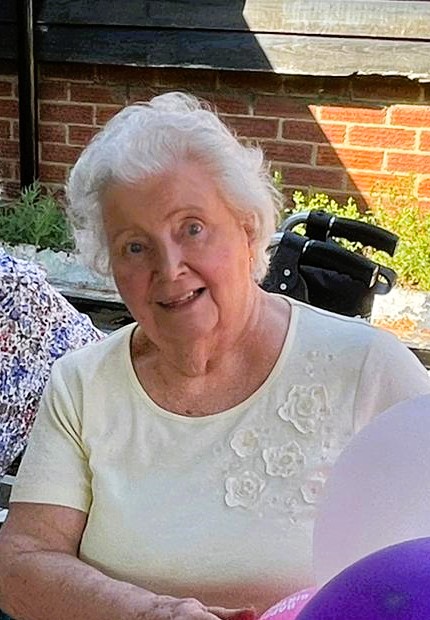
Mum made a life for herself
We lost my dad in 2001. But mum found solace in helping others. Her secretarial skills, quickness with figures and being able to drive (something she learnt in later life) stood her in good stead to volunteer as Secretary for Carers UK in Slough. She was also actively involved with the distribution of taxi vouchers for Slough Borough Council. Jean would often go, literally, that extra mile to make sure that people had their taxi vouchers in time for hospital visits.
She suffered from a genetic disorder of chronic lymphoedema in her legs, which started in her seventies. But it didn’t deter her. She was able to continue driving, got herself a blue badge to make journeys easier, and carried on.
Moving into a shared ownership home
In around 2007, mum was made aware of Extra Care Developments – built as a joint venture between Hanover Housing and Slough Borough Council. She decided that was her next destination. She would sell the family home that she was now struggling to manage and move into a flat at The Pines, Wexham.
Being an Extra Care Development, you could only ever own 75% of the property. And mum was fully aware that service charges would be payable for communal facilities, window cleaning, upkeep of the gardens, and so on.
At the time, The Pines was marketed as mixed tenure. There were 70 one-bedroom and two-bedroom units, plus an attached day centre. Of these, 25 were to be shared ownership with 45 for rent.
The numbers didn’t stack up
Soon after mum made her decision and put her house on the market, she heard that the number of units allocated for shared ownership would be reduced to ten. Consequently Mum was worried she might not get a flat.
What didn’t occur to us, at this stage, was the impact of this reduction in the number of leaseholders on service charges. With shared ownership you own a percentage of the property but pay 100% of charges, apportioned according to the number of leaseholders. Some service charge items are paid only by the leaseholders. And these costs would now be split between 10, instead of 25, units.
Anyway, mum secured No 11, made it her home with Sammy the parrot and began a new episode on her life’s journey.
Happy times
Not one to sit still for long and having an active mind, mum decided she would run the corner shop at the development, sort out outings, organise entertainment and bingo and generally get involved where she could.

She became Secretary of the residents’ group, typing up minutes of meetings and being actively involved with decisions about the running of the place, such as how much should be charged for the guest room.
She loved it. We joked that we had to make an appointment to visit, as she was so busy. Thank you, Hanover Housing!
So, what went wrong?
It seemed to us, as family, that Hanover Housing allowed residents to be involved and to make decisions. They were listened to and respected. The development was theirs, and they had a sense of belonging.
Mum experienced ten years of good times. Great food from the cook, award-winning gardens and many like-minded lovely friends.
In 2018 there was a merger. Anchor Housing took over Hanover Housing and formed Anchor Hanover Housing. What a profound difference! The award-winning gardener was replaced with a cheaper tender. The cook left and there was dissatisfaction with the new catering contract. From being content in her surroundings, we began to hear moans and dissatisfaction.
Declining health
Mum had a couple of falls, and then she was diagnosed with vascular dementia. She was hospitalised for a month, but desperately wanted to come home. Sadly, the carers that she had grown to know and love at The Pines were unable to offer the intensity of care that was needed. We outsourced. My brother and I started taking turns spending 24/7 with her, usually for three or four days at a time. Spending time with mum at her beck and call was a privilege. We know we did all we could.
Services and service charges
It was during this time I noticed that the once award-winning gardens had grass to a metre high. So I started looking more closely at the services mum was getting, and digging deeper into the service charges.
Repairs…. No one cares! I think that is one of the hardest points. When it’s your own place, you make decisions, oversee the quality of work and have an expectation of good service for payment. But when you’re reliant on a housing association who organise buildings insurance and communal works for you, how do you know there is quality of work for the money? Who oversees things?
We have had many contractors now, chosen by Anchor and paid for via services charges, where the quality of work was not remotely acceptable.
I asked for a full breakdown and copies of utility bills. In my first year of questioning items at Level One complaint stage I was sent replies, but nothing was really answered. My complaint was passed from person to person. In frustration I escalated it to Level Two. I ended up with an operative who answered each point according to a corporate response: “We are sorry you feel this way”, and “Yes, it could have been better”. Nothing about lessons learnt or changes to make.
Final move
Eventually, we had to make a decision for mum to move to a nursing home. That was hard in itself.
The fact that service charges and ‘catering infrastructure charges’ were still payable to Anchor, on top of the £6,000 per month for her care in a nursing home, seemed unfair. But our focus was on mum’s last few months. And not a penny do I begrudge the nursing home. I am so grateful that they had a beautiful room for mum to have the last months of her life in.
We started to market mum’s flat in November 2022. Mum’s passing was in March 2023.
Trying to make sense of things
Market forces – an apparent surplus of one-bedroom and two-bedroom homes in the area, in combination with high service charges for the extra care facilities – have created an unviable situation. We can’t sell mum’s flat.
Consequently a decent, two-bedroom, ground floor home is now sitting empty. A home built in 2008 using £2.9m grant funding from Homes England to Slough Borough Council and Hanover Housing. Why is this? Oh yes, we are cash cows.
We can’t finalise mum’s estate until all assets are liquidised. Meaning if we can’t sell the flat nothing can be distributed as to mum’s wishes. And if the flat never sells (or remains unsold long enough) then – through service charges and other contractual payments stipulated in the lease – Anchor Hanover will end up with everything in the estate, including the value of the flat and any savings that were left.
There’s a housing crisis. So if we can’t sell it as a shared ownership, why not buy it back? Why not change the type of tenure and let it out? Why can’t Anchor Hanover or Slough Borough Council free us from the need to pay service charges on an empty home?
But there is no way out. We are trapped.
Trapped.
Anchor has trapped us with a chain weighing us down.

How is it reasonable that dead people’s estates pay for services they cannot make use of? Mum would never have signed up for a shared ownership home if she’d known that her and dad’s hard earned money would end up going into the coffers of a housing association and not to her family.
Be First to Comment