The process for selling Older Persons Shared Ownership (OPSO) Extra Care properties is stacked against shared owners and their families, says a couple who inherited a retirement home.

If you are considering OPSO Extra Care shared ownership, we want to share our story with you. There’s a risk your family will end up in a truly horrible situation: paying the full costs for the empty flat for literally years, and losing tens of thousands of pounds.
Older Persons Shared Ownership (OPSO) Extra Care: what’s the risk?
I can’t tell you how big the risk is. But we do know that we are not alone. Housing 21 told us we were one of 25 families in scope of the buyback they eventually offered us. 25 families who had flats that had remained unsold, as they put it “for some time”. In our case, “some time” meant almost four years (and more than £63,000 down the drain).
We’ve since come across other families who have had – or are still going through – similar experiences with other housing associations, also with reselling OPSO Extra Care homes. This suggests that problems are systemic rather than down to the characteristics of individual properties.
The only people who know the extent of the risk are the housing associations. We asked ours what proportion of shared owners pay full service charges and rent on an empty flat for more than 6 months? 12 months? 18 months? 2 years? Housing 21 refused to answer. The Housing Ombudsman accepted their argument that they should not have to disclose this, because it would be “commercially sensitive”.

To put that another way, Housing 21 said they should not have to tell prospective buyers how big a financial risk they would be taking on, in case it might put them off. And the Housing Ombudsman said fair enough!
We lost over £63k on my late mother-in-law’s flat
After my mother-in-law died, we paid the full costs for an empty Housing 21 OPSO Extra Care flat for 3 years and 11 months.
We inherited a 50% share in her flat. We were liable for rent on the landlord’s share as well as the 100% of the service charge.
| OUR LOSSES | |
| Service charge and rent | £26,105 |
| Mortgage interest | £8,047 |
| Council tax | £4,809 |
| Electricity | £513 |
| Marketing, valuations and legal fees | £3,270 |
| Capital loss at buyback | £21,000 |
| TOTAL | £63,744 |
The Extra Care flat was a great solution for my mother-in-law while she was alive. She had dementia and could no longer manage at home.

She died in June 2019. She had lived there for 18 months, from December 2017. But it took us 2 ½ times that long to sell.
We tried everything to sell
We tried really, really hard to sell the flat, but we could not.
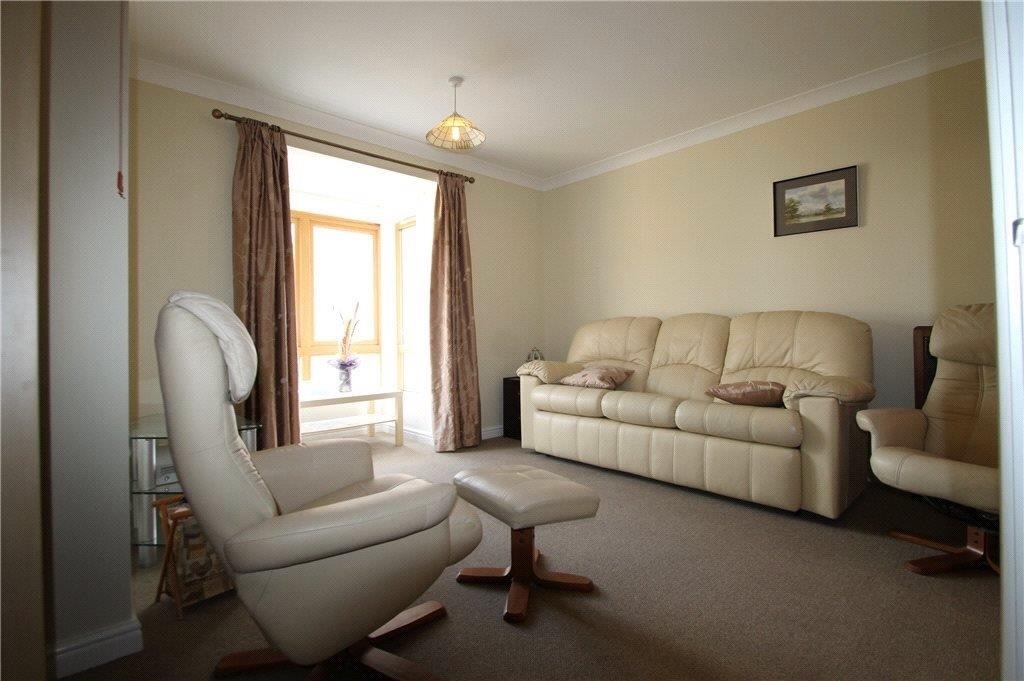
- We fully redecorated in a cream and white scheme.
- We advertised for years through two specialist retirement portals. One of them refused to take any more money for renewing our adverts.
- We tried three estate agents, including a specialist in retirement properties and a specialist in homes that wouldn’t sell.
- We tried being multi-agency.
- Reducing the price.
- Making our own A4 flyers, and asking permission to put them up on noticeboards at day centres and church halls.
- Hand-delivering the monthly cheque to the Housing 21 Court Manager’s office at the scheme, with a little note attached, asking him to tell us if anyone enquired.
The rules of OPSO prevented us selling at auction, or to a “Webuyanyhome.com” buyer-of-last-resort. We could only sell to someone who met the criteria for OPSO, and with Housing 21 approval, after an interview with their Court Manager.
Housing 21 refused to let us sublet the flat
The Homes England Capital Funding Guide (CFG) allows shared ownership providers to buy-back flats, or approve subletting, “in exceptional circumstances”. Albeit the Greater London Authority (GLA) Guide refers to ‘leaseholders’ rather than estate executors. (Guidance generally overlooks estate executors).
After a year (and many more times, repeatedly!) we asked Housing 21 for permission to sublet. We set out how we would meet all the CFG’s conditions around subletting. Housing 21 refused.
Housing 21 insisted that “exceptional circumstances” meant “a resident living in the property suffering financial hardship”. There was no resident, and in Housing 21’s judgement, no hardship. So Housing 21 concluded that “exceptional circumstances” didn’t apply, and they were under no obligation to help us.
We gave Housing 21 a detailed breakdown of our first c. £18k of losses. And we explained how these would grow if they did not permit us to sublet. But the Head of Extra Care considered there was a “lack of evidence of current or potential financial hardship“.
Housing 21 refused to buyback the flat
As Housing 21 were withholding the only means to offset ongoing costs, we asked them to stop the charges, or buyback our share. They refused a buyback. Adding: “Resales have been looked into for Belsize Court and does not see a pattern of leaseholders struggling to sell, although I can see that your property and one other has been on sale for some months now ”.
By then, our flat and another 50% shared ownership 1-bed flat had both been on the market for around 15 months.
Guidance on subletting and buyback is ineffectual
In our experience, the guidance on subletting and buyback is ineffectual, because decisions are left entirely to the housing provider’s discretion.
4.1.132. Resales of OPSO homes will generally follow the same principles as for mainstream Shared Ownership and will always be governed by the terms of the lease.
4.1.133. Where shared owners are experiencing significant difficulties in selling their OPSO home providers are encouraged to explore other options with their leaseholders. This could involve:
- The possibility of the provider repurchasing the property and letting the property at an Affordable Rent
- Giving temporary permission to the leaseholder to sub-let the property.
In all cases tenancies should only be granted to persons aged 55 years or over
4.1.134. Where owners request that subletting be permitted, this should be in line with the wider funding guidance, with the additional stipulation that tenancies must only be granted to persons aged 55 years or over.
There is no enforceable definition of ‘exceptional circumstances’ or ‘hardship’. Despite the fact that we ended up paying around £1,522 in monthly charges, Housing 21 insisted that we were not eligible for subletting.
| MONTHLY CHARGES | |
| Rent and service charges | £858.81 |
| Council tax | £182.10 |
| Mortgage interest | £465.62 |
| Electricity | £15,28 |
| TOTAL | £1,522 |
The subletting prohibition was financially disastrous for us, and made a bad situation even worse.
Wherever we turned, no-one could help us
We fought back, every way we could think of. But we learned the hard way that Housing 21 were judge and jury!
- There was no independent authority exercising any scrutiny over the reasonableness of Housing 21’s decision-making, notwithstanding how devastating the consequences were to us.
- Our Scheme was in Greater London, so it was the GLA, not Homes England, who issued the Capital Funding Guide (statutory guidance) governing our OPSO lease. On advice from the Leasehold Advisory Service (LEASE), we asked the GLA to review the way Housing 21 were interpreting and applying the rules around buy-back and subletting. They said “Generally, the GLA defers decisions regarding subletting to the Registered Providers of the property”!
- We tried the Housing Ombudsman. They said our issues were outside their scope.
- We approached lawyers, who told us Housing 21 were too big to take-on.
- Our MP could not get any movement in Housing 21’s position – not even when the flat was still unsold after three years.
We were entirely at their mercy. We couldn’t sublet, they wouldn’t buyback, we couldn’t sell. We developed a kind of Stockholm syndrome: keeping quiet, playing nice – for fear of antagonising Housing 21 – the only people who could offer us a way out. In the end they did, but at a horrible price.
“When we read the buyback offer letter, we were both in tears.”
Our ‘buyback offer’ (in 2023) was just 80% of the price we paid in 2017. And we had to commit to doing any maintenance work they might deem necessary – at our expense – before they would sign.
Once the Lease Surrender deed was ready, Housing 21 dragged out the process. Even seeking a 3-month delay before completion, when finally the costs would stop. Which cost us another £1,500 or so every month. But we negotiated a concession. They agreed to complete after two months instead of three.
A gross imbalance of power in our relationship with Housing 21
The imbalance of power was so great that Housing 21 took it for granted that they could do as they wished with the flat. Even though in theory we owned 50% of it. We had no rights.
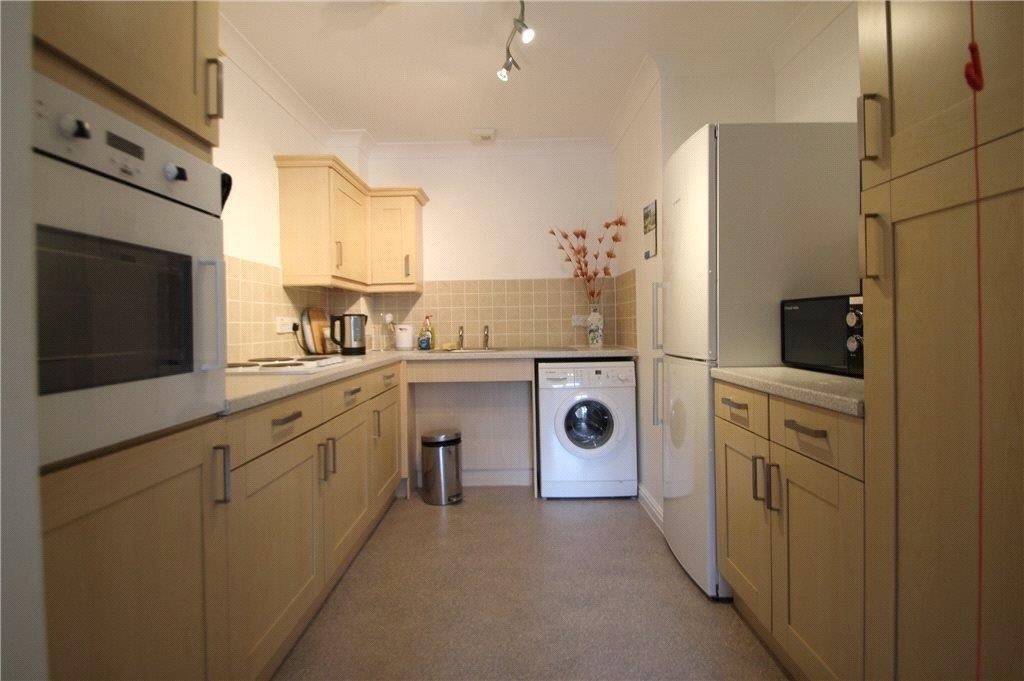
In the run up to the buyback, when we visited the flat to remove my mother-in-law’s possessions, we discovered that Housing 21 was letting tradespeople do work to the flat without telling us – let alone consulting us. They fitted a new door-entry system in the hallway. We found a panel of the fitted kitchen propped-up against other units. A plumber had taken it off to access a pipe.
Our lease assumes the shared owner can sell independently of the housing association. But, for OPSO Extra Care, that is a false premise.
Our lease said we (the shared owner’s family) were solely responsible for finding a buyer. But in reality, if ever we did find a buyer, the chances of it happening independently of Housing 21 were very slim.
An email from their Property Sales Team Leader said that: “Only two properties have sold via estate agents over the last six years”. And: “Generally speaking we have people who contact us via the court manager and our dedicated sales team to enquire of properties”. This isn’t surprising: Extra Care OPSO is different from ‘ordinary’ warden-supported, sheltered housing. Our development had a uniformed care team, on site, 24/7.

A retirement property-specialist estate agent who marketed our flat unsuccessfully for nearly two years said he could not reach an audience who would want to live in that environment.
Indifference and incompetence
Having zero accountability for resales, Housing 21 operated without regard to how their decisions would affect shared owners trying to resell.
Marketing delays and lost opportunities
Although they’d told us resales generally resulted from an approach via Housing 21, the housing provider caused unnecessary delays and potential lost opportunities.
- Due to faults on their website, Housing 21 didn’t list my mother-in-law’s flat on their resales listings for 18 months.
- The manager of the development knew that my mother-in-law’s flat was for sale. But he left, and we discovered that no-one had told the new manager. Consequently, if anyone had contacted the development directly to ask about vacant properties for sale, the new manager wouldn’t have mentioned her flat. We don’t know for how many months that was the case.
Covid
During Covid, our scheme followed the lock-down protocol for care homes. That was the right thing to do, for the welfare of the residents.
But the notices warning-off visitors stayed up for weeks after the lock-down lifted. The Court Manager changed from being mostly on-site, to mostly working from home. It routinely took several days, trying several times each day, before anybody answered the phone. It would have taken a lot for any potential purchasers not to be put-off by that.
While we struggled to sell, Housing 21 had sales and marketing teams for their new-build sales
Housing 21 has sales and marketing teams – but these are for their new-build sales at new developments. They left us to struggle while they were selling around two flats like ours a week at their new schemes. The resale process was stacked against us.
Buyback policy: weak transparency
Housing 21 doesn’t publish a buyback policy. However, they told us they couldn’t consider buyback unless sales were “struggling” in a specific development for at least three years.
A terrible toll, and an unanswerable case for change
We went through psychological torment – dragged-out for years. It was so painful to watch so much money leaching away from our family. All to pay for no services, to no resident, in an empty flat.
My first thought in the morning was: will a buyer come forward today? At night I was lying awake, worrying about whether Housing 21 would tell us the flat had zero value, and force us into handing over the keys, and losing all of the £105k capital, on top of the several years’ monthly costs.
We couldn’t remove my mother-in-law’s possessions from the flat, because the Council said they would double the Council Tax if we did. Leaving my husband without that closure for almost four years after his mother’s death.
Where an OPSO Extra Care home remains unsold, the family bear 100% of the risk. In fact, there is a perverse incentive for retirement housing providers not to sell vacant Extra Care properties. There is less work, for the same income, as if the resident was still living there. The Registered Provider is incentivised to apply for fresh grants to build new developments, rather than maximise the utilisation of existing, taxpayer-funded schemes.
It is inevitable that residents in retirement homes, sooner or later, will die or move into nursing homes. Yet people who inherit OPSO Extra Care homes are overlooked in guidance, leases and regulation. This has to change.
How I’d improve shared ownership
Immediate, mandatory limits on how long a shared ownership flat can remain vacant before the registered provider must offer to buyback the share at market value. This would share the resale risk between the shared owner and the registered provider, instead of the shared owner carrying all the risk and the registered provider having no incentive to ensure the flat is re-occupied within a reasonable time.
MHCLG to have open-book access to registered providers’ shared ownership resales data. Policy teams need full, objective information so they can make fair, evidence-based decisions on reforms. The sector must not be allowed to set constraints around what data is provided (versus what can remain hidden). Factors like the age of an OPSO development, or the size of the shared owner’s % share, or even the number of bedrooms, are likely to materially affect the level of risk of a flat failing to re-sell.
Prospective buyers to be given information about the actual probability of resale problems, based on historic data for the sector (not the scheme!) and guidance on how to estimate the extent of the financial risk. The OPSO Key Information Document simply states that costs remain payable until a property is resold. This is ineffective as a risk warning, because it does not make clear that the time to taken to resell may be massively longer than prospective buyers would assume.
Equal consideration in guidance, leases and regulation for shared owner’s representatives, including Executors and those with Power of Attorney.
Free-of-charge access for shared owners to an independent review, to confirm the reasonableness of registered providers’ interpretations of the Homes England / GLA guidance, especially their decision-making on subletting requests and buyback requests. The reviewers to be consumer and grant-funding body representatives. The registered providers not to be able to dictate the terms of the review.
An obligation on the provider to treat shared owners’ families (who are paying them!) as customers, to respect shared owners’ families rights to “their” property, and not to act in ways that disadvantage their ability to resell. Shared owners’ families to have a right to compensation where the provider defaults on these obligations.
Be First to Comment