This month, we explore growing calls for shared ownership reform, new research into the challenges shared owners face, and ongoing concerns about resale and buyback.
In October, we discussed our ‘Shared Ownership Insights: Buyback‘ report with government representatives, published a four-part Q&A with Homes England on shared ownership valuations, and continued to raise awareness of the need for greater fairness and transparency.
Read on for our roundup of the latest shared ownership news and our activities throughout October.

Social Housing Bill: What next for a review of shared ownership?
In July, the House of Lords voted in favour of a shared ownership amendment to the Social Housing Bill. The amendment, proposed by Lord Young of Cookham and published as Clause 13 of the Bill, called for a statutory review of the scheme’s affordability, its effectiveness as a route to full home ownership, staircasing arrangements, and barriers facing shared owners. It required the government to report back to Parliament on its findings and proposed actions.
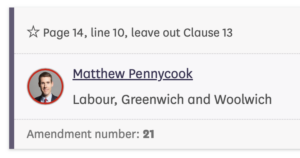
However, Matthew Pennycook, Minister of State at the Ministry of Housing, Communities and Local Government (MHCLG), subsequently tabled an amendment to remove Clause 13 from the Bill.
We immediately published a statement by our Chair, John Mayford, responding to the Government’s move to remove a statutory review of shared ownership from the Social Housing Bill.
During October, we encouraged shared owners, and people who’ve inherited shared ownership homes, to submit written evidence to the Public Bill Committee, which is scrutinising the Social Housing Bill.
We also submitted our own written evidence to the Committee, addressing Clause 13 and the amendment requiring a review of shared ownership, alongside the objective of protecting social housing stock.
We’ll share further updates when the Committee publishes the written evidence it has received and its report.
Shared ownership valuations: Our four-part Q&A with Homes England
Valuations play a significant role in shared ownership, affecting everything from purchasing an initial share to staircasing, extending a lease and selling a property.
This month, we published a four-part Q&A with Homes England addressing some of the most common questions and concerns about shared ownership valuations.
The series covers:
- New-build shared ownership valuations – How initial sales prices are determined, the role of RICS valuations and what happens when a mortgage lender’s valuation is lower than the sales price.
- Staircasing valuations – How additional shares are valued, the costs involved and the rules applying to different staircasing arrangements.
- Lease extension valuations – Valuation considerations when extending a shared ownership lease and the current position on statutory lease extension rights.
- Resale valuations – RICS valuations, nomination periods, revaluations and lender “down valuations” when selling a shared ownership property.
One important point concerns resale valuations. Homes England has updated its guidance to give landlords greater flexibility around the usual 3-month validity period for RICS valuations, although using a RICS valuation for longer than three months remains at the landlord’s discretion.
Our Q&A also explores situations where a mortgage lender values a property below the agreed sale price, potentially creating further difficulties for buyers and sellers.
We hope this series will help shared owners better understand the rules and processes that can affect the costs, affordability and saleability of their homes.
Shared ownership buyback: Taking our research to government
Following publication of our ‘Shared Ownership Insights: Buyback’ report in September, we were delighted to have an opportunity to discuss our findings with Kate Webb, the Prime Minister’s Special Advisor for Housing and Infrastructure, at 10 Downing Street in October. We also had meetings with MHCLG and Homes England to discuss the report.

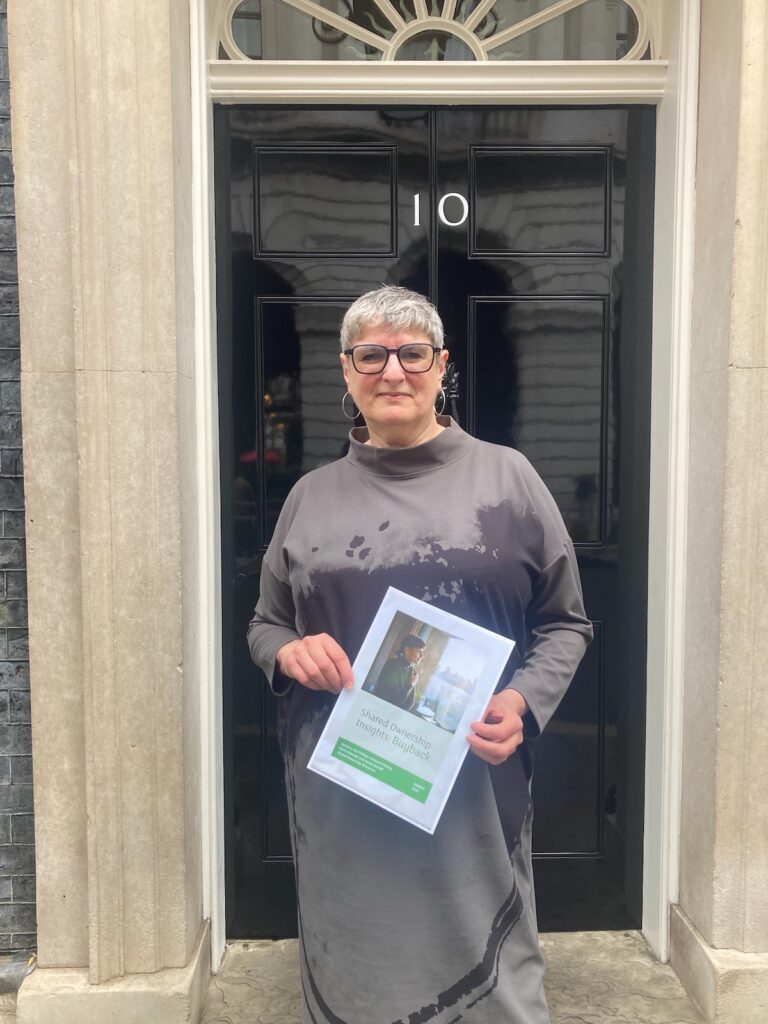
Our discussions focused on the barriers some shared owners face when trying to sell their homes, and the need for a clearer, fairer approach to buyback where other exit routes are blocked.
We raised concerns about resale restrictions, including eligibility and affordability requirements, short landlord head leases, and staircasing caps applying to some Older Persons Shared Ownership (OPSO) and Designated Protected Area (DPA) homes.
Shared ownership case studies
In the meetings we also discussed two cases featured in our report.
One shared owner had been subletting at a loss for years before discovering that her landlord’s interest in the lease was only ten days longer than her own, making a lease extension unviable. Another has an unsellable 80% share, with the landlord unwilling to remove the staircasing cap.
These experiences highlight the difficulties that can arise when shared owners have no realistic route to sell or exit the scheme.
We also discussed the lack of data on potential demand for buyback. Better evidence is needed to understand how many shared owners may require this option, and whether wider access could help address problems within the scheme.
Our report calls for a clear, fair and mandatory framework for buyback, improving access to and exit from shared ownership while helping protect social housing stock.
My SO Home: Difficulties accessing shared ownership buyback
Our 43rd ‘My SO Home’ case study shares the experience of Anna Belabbes, who purchased a 45% share in a Brighton property through a key worker housing scheme in 2012.
Anna had hoped shared ownership would provide a stepping stone towards a home that better suited her family’s needs.
Instead, she describes years of water ingress, mould and building safety concerns, which have affected the property’s value and marketability.
Unable to sell on the open market, Anna approached her housing provider, Moat Homes, about buyback. However, she reports struggling to obtain clear information about the criteria used to assess her request and the options available.
She has since escalated her concerns to the Housing Ombudsman.
Her experience highlights the importance of transparent buyback policies and effective routes to redress, particularly where serious building defects leave shared owners unable to sell their homes.
As our recent report demonstrates, buyback can sometimes provide an essential exit route. Yet access remains limited, and the process can be difficult for shared owners to navigate.
LEASE report highlights challenges facing shared owners
A new report from the Leasehold Advisory Service (LEASE) has highlighted the challenges experienced by shared owners seeking advice and support.
The research analysed 791 enquiries from shared owners during the 2025/26 financial year, alongside five years of wider enquiry data.
Common concerns included service charges, repairs, staircasing, resale restrictions, lease extensions and difficulties obtaining information from landlords and managing agents.
The report also highlighted how the complexity of shared ownership itself can contribute to these problems. Shared owners may face significant financial commitments while remaining dependent on housing providers for decisions affecting their homes.
The research provides further evidence of the challenges facing people who contact LEASE for support, although LEASE emphasise that their enquiry data does not necessarily represent the experiences of all shared owners.
On 13 October, our founder, Sue Phillips, and trustee, Philippa Marks, joined a LEASE roundtable bringing together government representatives, shared ownership groups and sector organisations to discuss the findings.
We highlighted concerns about the affordability of shared ownership in retirement, access to redress when things go wrong, and the difficulties faced by families inheriting Older Persons Shared Ownership (OPSO) Extra Care properties.
The latter issue has also received wider media attention, including an ITV documentary examining problems with retirement properties.
The findings reinforce our concerns that improving information and advice, while important, cannot on its own resolve problems arising from the structure of shared ownership.
You can read the LEASE report summary for further details.
Trustee Away Day: Part Two
At our Trustee Away Day (Part Two) – facilitated by Black on Board CEO, Lara Oyedele – trustees and invited guests discussed:
- what being “led by shared owners for shared owners” means to us
- how we can reach more shared owners, and
- how to take forward priorities including a meaningful review of the shared ownership scheme and improved access to buyback.

We’d love to hear your views. What can we do to let more people know about the Shared Ownership Resources website and our monthly email newsletter?
If you’d like to get involved, please get in touch: info@sharedownershipresources.org.
Stay up to date on shared ownership
October has brought further attention to some of the challenges facing shared owners, from valuations and resale restrictions to access to buyback and the need for wider reform.
The removal of Clause 13 from the Social Housing Bill raises important questions about the government’s willingness to engage in a comprehensive public review of shared ownership. Meanwhile, the LEASE report and the lived experiences shared through our My SO Home series continue to highlight problems with affordability, transparency and consumer protection.
We will continue gathering evidence, engaging with policymakers and housing organisations, and campaigning for a fairer shared ownership scheme that works for both current and future shared owners.
To stay informed about our latest research, shared ownership news and campaigning activities, join our mailing list for updates, journalist requests and/or fundraising appeals. Just click the ‘KEEP ME UPDATED’ box in the lower left hand corner of this page.
Be First to Comment